Category Archives: Recipes – Entrees

Food Traditions at the Indy 500

This weekend holds a lot of significance. First, it is a time to honor veterans. We also welcome the summer season with barbecues and the return of white clothing. And we get to enjoy another tradition with the Indianapolis 500. The green flag at noon on Sunday marks the start of the car race’s 100th anniversary. Growing up, this race was always on our television during the Memorial Day weekend. The cars whizzed around the track while the sportscasters talked about how fast Andretti was moving or how long it took Rahal to change a tire in pit row.

Besides the traditions in my house, the Indy 500 is steeped in tradition, especially those involving food. A very popular food sold at the concession stands is a pork tenderloin sandwich. I wonder how many are sold, given that approximately 300,000 people attend this annual event? If you have yeast sensitivities, consider making your own by skipping the bun and substituting the breadcrumbs with crushed brown rice cereal or crackers. Click here for one version of the sandwich.

Domestic beer is another item that has very brisk sales among the visitors. Unlike most venues, spectators are allowed to bring their own alcoholic beverages as long as they are not in bottles because shattered glass is dangerous on the track. So people with sensitivities to yeast and sugar can bring their own beverages – perhaps some water, tea or whiskey.

Peanuts are considered to be bad luck at the race track because there is a legend that a crashed car was found to have peanut shells inside. This was good news for folks with peanut allergies until 2009 when the concession stands began selling them.

Another tradition, started in 1933, was the “milk tradition.” After that race, which was on a very hot day, winner Louie Meyer headed for his garage where he had a bottle of buttermilk in an icebox. As he drank, a photographer captured the moment and the next day the picture of Meyer drinking the milk was in the newspaper. Indiana dairy people thought it was wonderful publicity and since then there has always been a bottle waiting for the winner. If the winner was sensitive or intolerant to cow’s milk, perhaps the bottle could be switched with an alternative such as goat, soy, almond or rice milk.

Whether you spend a part of your Memorial Day weekend at a parade or barbecue, watching or attending the Indy 500, or doing something else special, I hope that you enjoy some foods that are delicious and of your own tradition.

What’s the Beef About Grass-Fed Beef?

I have wonderful memories as a child and young adult where my dad would fire up the grill for the steaks and my mom would make baked potatoes and vegetables. If it was a warm day, we would eat our delicious dinners on the deck. Oh yum…I can almost smell the steaks right now!

My love affair with a tasty steak continues. I do not eat them nearly as often as I used to although they are still seen at happy events and occasions. I just like to celebrate with a filet, tenderloin or strip steak on my plate!

A few weeks ago, while perusing the meat counter at the natural foods store, I made a decision – to purchase some grass-fed beef.

What is grass-fed beef? According to the USDA, the cows only eat what is in the pasture. This contrasts with typical grain-fed beef, which starts at pasture for the first year and then moves to a feedlot for a diet of corn, soy, grains, supplements, hormones and antibiotics. Research from Cooking Light notes that grain-fed beef can get up to weight for slaughter up to one year faster then their grass-fed counterparts, which is a financial incentive for the farmers.

Is there a nutritional benefit to grass-fed beef? Sure. According to this Time article, 100% grass-fed meat is lower in saturated fats, slightly higher in omega-3 fatty acids and higher in vitamins A and E.

So how does the grass-fed beef taste? When I made that first purchase, I got one package to eat fresh and one package to freeze for later. The fresh beef, which is shown in the picture above, was absolutely delicious. My husband seasoned the steaks with kosher salt and fresh ground pepper, and grilled them for a slightly shorter time than our usual grain-fed meat (because they were so lean). We both agreed that these steaks were much better than the usual ones. A couple of weeks later, we defrosted the frozen steaks and grilled them the same way. However, they were not quite fully defrosted, and in compensating we ended up overcooking them. Grass-fed beef is less forgiving to overcooking, so keep that in mind.

The cost is relatively high; I spent almost 50% more on the grass-fed meat. However, buying grass-fed is not just an economic decision – it can be an environmental or health decision too. Growing grass is easier on the environment than growing corn, and the decreased use of antibiotics and hormones are other reasons that people hand over more “green” for the grass-fed varieties. A less expensive per-pound alternative is to buy directly from a farm. Check out a listing of farms in you area at the website for the American Grassfed Association.

Will I buy more grass-fed beef? You bet! It is a wonderful treat.

Reprise of Garlic and Shrimp Pasta and Brussels Sprouts in a Chicken Dinner

It is amazing how last night’s dinner can become tonight’s side dish, isn’t it? My husband and I like to put a little bit of time into planning what we will eat for dinner during the week so that we can enjoy delicious meals without too much hassle. Take for example, sauteed chicken – we like cooking these chicken tenderloins during the week because they are simple and quick. We cook them in a sauté pan over medium heat with extra virgin olive oil, kosher salt, pepper, parsley and Italian seasonings. In about 15 minutes they are ready to serve. The leftover Garlic and Shrimp Pasta and Brussels Sprouts make terrific accompaniments. For the next night’s dinner, pair the leftover chicken with a new side dish – perhaps the Couscous with Cherries and Almonds! The rotating dinner plan is one that works for us and hopefully for you too!

MIL and FIL’s Garlic and Shrimp Pasta

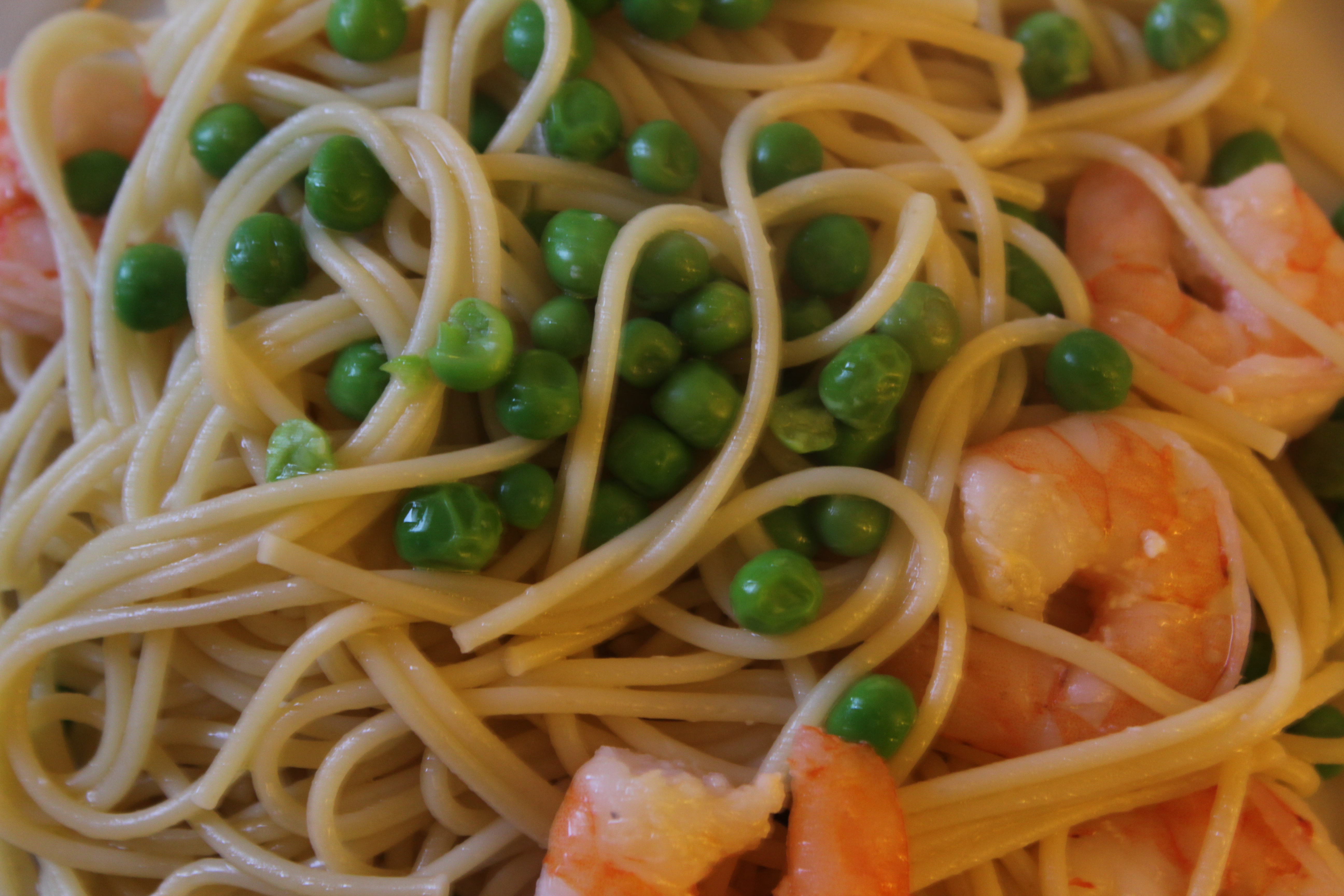
Last night, my husband and I whipped up this delicious dish. What a great way to start the weekend! It’s a version of the classic agilo e olio, or garlic and oil, pasta dish. I first had this dinner at my MIL and FIL’s house around the holidays and liked it so much I asked them how to make it. It is quickly becoming a classic in our household! This is a great way to enjoy pasta if you are sensitive to tomato sauce. Instead of the shrimp and peas, you could add chicken and broccoli – or something else! If you have other variation ideas, please share them by commenting below. (And five points goes to whomever can correctly identify what MIL and FIL stands for!)

Ingredients (for two-person meal): 2/3 lb spaghetti; 4 garlic cloves, chopped; 1/4 cup extra virgin olive oil; 14 large and frozen shrimp, deveined, peeled and raw; 1 cup organic peas, frozen

Fill the pasta pot with water. As the water reaches a boiling temperature, chop the garlic cloves and mix most of them into the 1/4 cup of oil. Cook the spaghetti according to the instructions on the package. As the spaghetti cooks, heat a small frying pan with a bit of extra virgin olive oil. Sauté the remaining garlic in the pan, then add the shrimp and heat until cooked (shrimp will turn pink). When there are two minutes left for the pasta to cook, add the peas to the water. Once the pasta is cooked, reserve about 1/2 cup of the pasta water. Drain the pasta and peas, then add back into the empty pasta pot. Stir in the garlic and oil mixture, then add the garlic and shrimp sauté. Add in the reserved pasta water until it reaches your desired liquid amount. Have a wonderful dinner!

I am also sharing this recipe with Everyday Sisters and Miz Helen’s Country Cottage.