Quick! Make These Peanut Butter Chocolate Chip Cookies Before Prices Increase!

According to the Chicago Sun-Times, the prices for peanuts and peanut butter are on the rise. The peanut supply is lower than normal due to two factors: (1) fewer peanuts were planted because farmers opted to grow more profitable cotton and corn, and (2) the prolonged high temperatures this summer adversely affected the peanut crop.

Alabama, Florida, Georgia, Mississippi, New Mexico, North Carolina, South Carolina, Texas and Virginia produce the majority of the nation’s peanuts. According to the USDA, an extreme drought in Texas and Oklahoma has reduced the peanuts harvested.

J.M. Smuckers, which makes JIF, has announced that the price of its peanut butter will increase 30% starting in November. Other peanut companies are likely to follow suit.

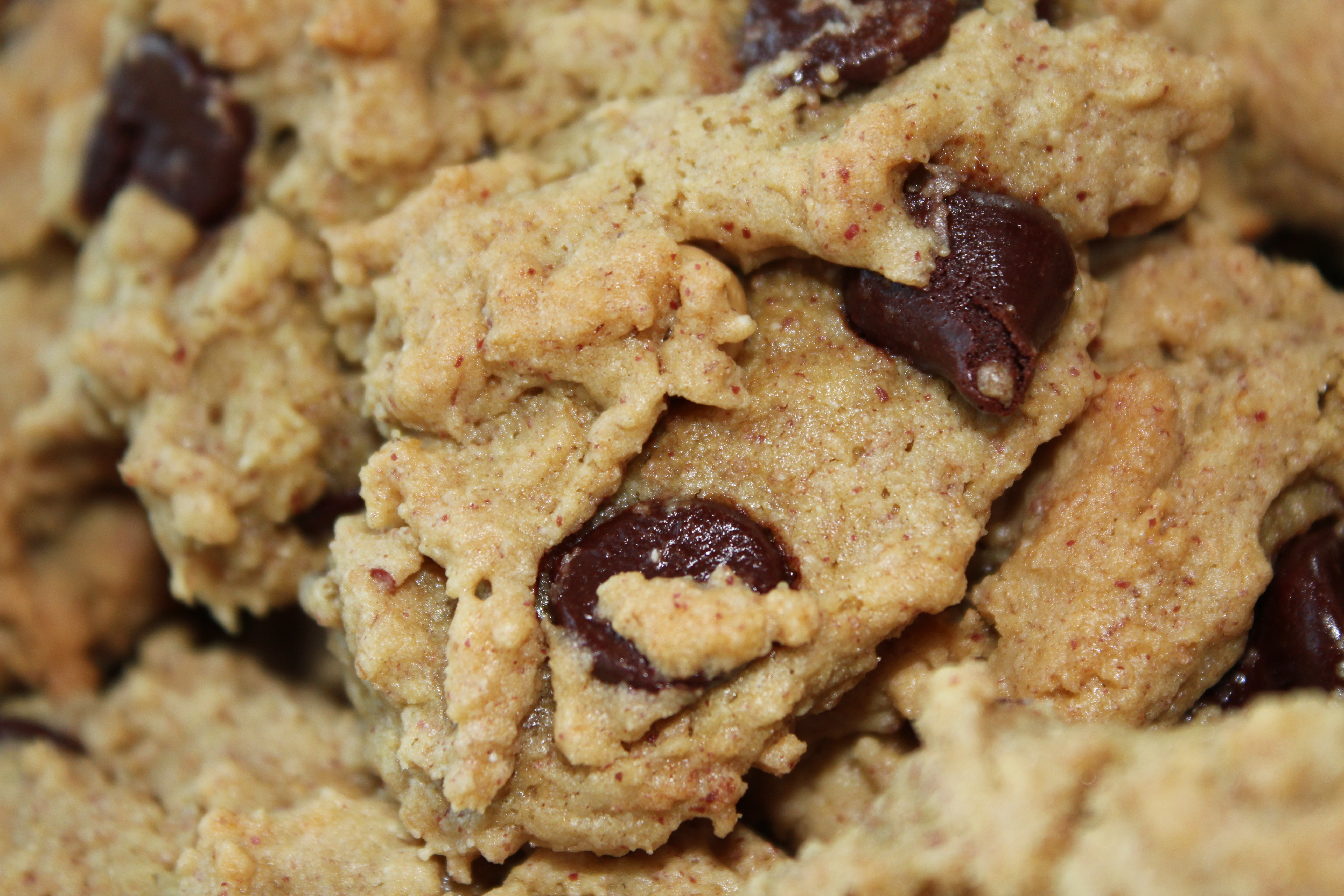
So what should we do? I say let’s bake, bake, bake…and fast before the prices rise. There are lots of peanut butter foods from which to choose – I have already shared recipes for Peanut Butter Cups, Honey Peanut Butter Frosting and Peanut Butter Chocolate Chip Brownies, and now I am happy to share a terrific recipe for Peanut Butter Chocolate Chip Cookies below. The recipe was inspired by Terry Walters’ Clean Food; I used whole wheat flour instead of teff and swapped grain-sweetened for semisweet chocolate chips. I plan on enjoying these delicious cookies often…and stocking up on peanut butter this month so I can keep baking them through the winter.

Ingredients:
1-1/2 cups whole wheat flour
1/4 teaspoon sea salt
1 teaspoon baking soda
1 cup chunky 100% organic peanut butter
1 cup maple syrup
1/2 cup grain-sweetened chocolate chips

Directions:
Preheat oven to 350°F.

Combine all dry ingredients in one bowl and all wet ingredients in another. Pour wet ingredients over dry and blend until just combined – do not overmix. Fold in chocolate chips.

Drop batter by heaping teaspoons onto cookie sheet. Place in oven and bake 13 minutes or until lightly browned. Remove from oven and place directly on wire rack to cool. Makes approximately 20 cookies.

I am sharing this recipe with Joy of Desserts, Simply Sugar and Gluten Free, Balancing Beauty and Bedlam, Lady Behind the Curtain, This Chick Cooks, Miz Helen’s Country Cottage, Food Trip Friday and Sweet as Sugar Cookies.

Chocolate Banana “Ice Cream”

I typically eat my bananas with breakfast although they also make delicious desserts. Here’s the proof: a few weeks ago I froze some ripe bananas before they spoiled. I did a quick Internet search to figure out what I could do with the frozen fruit. A recipe on Dr. Weil’s website for Cocoa-Banana Frozen Dessert got me thinking…I could try something like this! Below is my version of the recipe:

Peel and mix 4 frozen bananas together with an electric mixer until smooth. Next, mix in 2 tablespoons of cocoa powder. Top with either fruit, grain-sweetened chocolate chips, unsalted peanuts, or all three! Makes 4 servings.

I am also sharing this recipe with Joy of Desserts, Simply Sugar and Gluten Free, Beauty and Bedlam, Lady Behind the Curtain, Miz Helen’s Country Cottage, This Chick Cooks, Food Trip Friday, Sweet as Sugar Cookies and Cybele Pascal Allergen-Free Cuisine.

Grilled Wild Salmon Creates a Quick and Delicious Meal

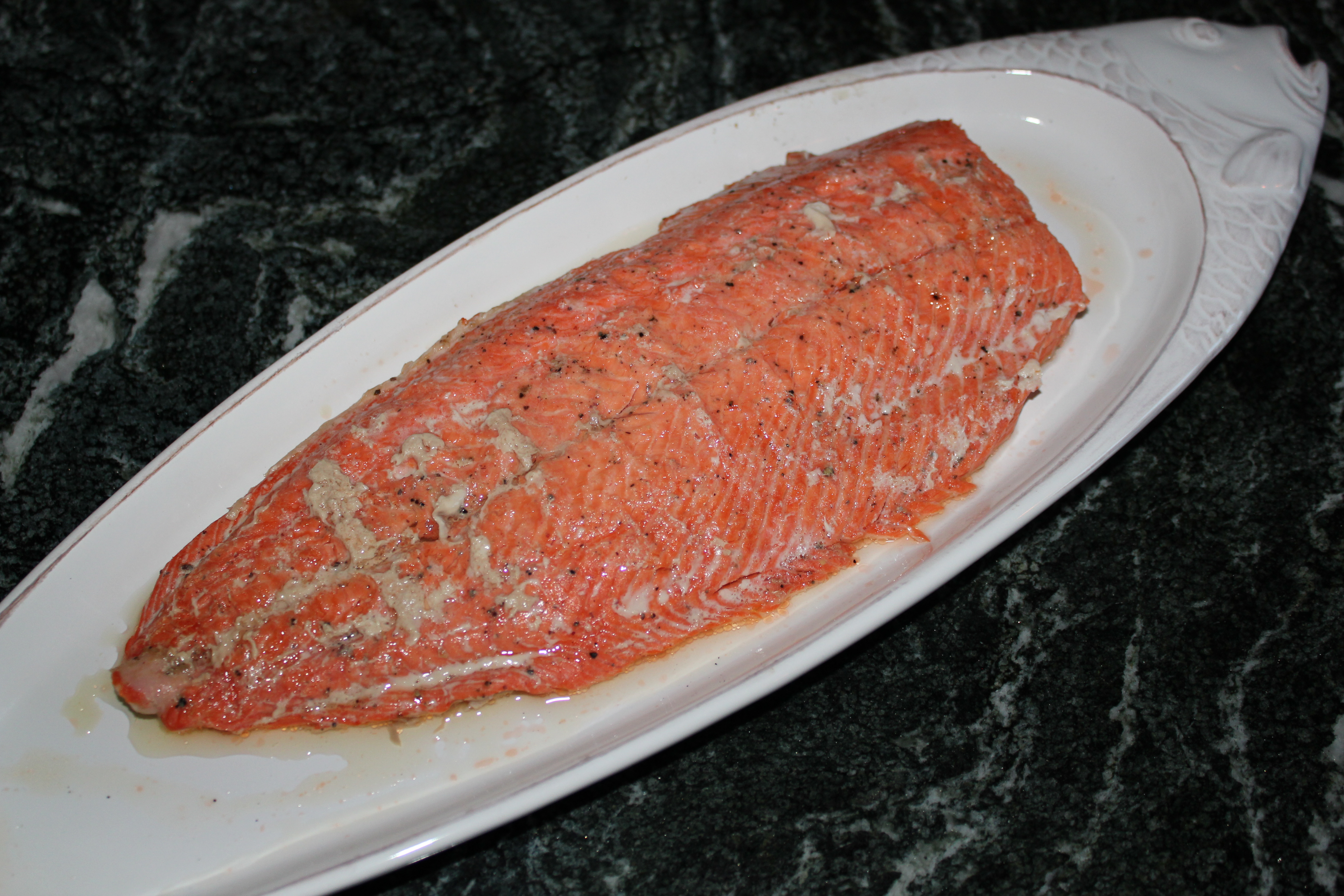
Just because summer has drawn to a close and autumn is upon us does not mean that one has to hang up the grill tools. SensitiveHusband grills year-round, much to my delight. One of his masterpieces is grilled salmon, which is really easy and quick to prepare.

Start with a good fillet, season with kosher salt and pepper, and wrap the fish in aluminum foil. SensitiveHusband has developed a trick: he puts the fish skin side up on the foil, and he folds it over the skin, making sure the foil is flat against the skin. Then seal the foil around the edges of the fish.

He has a grill trick too: he puts the skin side on the grill first, flips once, and then when he opens the foil the skin is on top and peels right off!

Grilling times vary by fish type: wild-caught salmon needs less time to cook than a farm-raised fish because it is less fatty. Wild-caught takes approximately 6 minutes per side while farm-raised should be grilled for 8-9 minutes per side. Start the grill on high heat and once the salmon is on the grill, turn it down to medium heat.

If you are debating whether to purchase wild or farm-raised salmon, the wild is a healthier choice. The wild salmon does not contain pesticides, antibiotics or artificial coloring; has less fat and more protein; and is more concentrated in omega-3 fatty acids.

Fresh, wild salmon is available nearly eight months of the year, with high quality “frozen at sea” (FAS) available during the other months. According to the George Mateljan Foundation (GMF), a nonprofit that provides information about healthy foods, when buying salmon, opt for line-caught Alaskan fish first because the healthiest populations and habitats exist in Alaska. My favorites are the Alaskan Sockeye and Coho; the King Salmon is a real treat during the summer.

Another note from GMF is that fresh “Atlantic” salmon is generally farm-raised, so the name refers to the species rather than the origin.

If you are also looking for sustainable fish choices, the Marine Stewardship Council has a searchable database of products that adhere to strict sustainable fishing practices.

So fire up the grill, cook some couscous, and enjoy some wild salmon throughout the year!

Happiness is…a Peanut Butter Chocolate Chip Brownie

My focus lately has been on creating tasty cookies without cane sugar, although I do not want to slight my good friend the brownie. Brownies are also delightful treats and my mouth started to water when I saw this recipe for Peanut Butter Blondies in the September 2011 issue of Cooking Light Magazine.

To remove the cane sugar, I substituted with honey. I used a lovely organic creamy peanut butter and added peanuts for a little extra crunch. The recipe below also calls for more chocolste chips than the original, which seemed like a good idea to me. Another possibility is to crumble some peanut butter cups on top – that sounds like a good addition. I did not have a 9-inch square plan so I used a 6 x 10 inch pan and it worked out just fine. I hope you enjoy these cake-like, chewy, peanut-y, chocolate-y treats.

Ingredients
1 1/4 cups all-purpose flour
1/2 teaspoon baking powder
1/4 teaspoon salt
2/3 cup honey
1/3 cup creamy peanut butter
1/4 cup butter, melted
2 tablespoons milk
1 teaspoon vanilla extract
2 large eggs, lightly beaten
1/3 cup grain-sweetened chocolate chips
1/4 cup unsalted peanuts

Preparation
1. Preheat oven to 350°.
2. Combine flour and next 2 ingredients (through salt), stirring well with a whisk. Combine honey and next 5 ingredients (through eggs), stirring well. Add peanut butter mixture to flour mixture; stir until combined. Stir in chocolate chips and peanuts.
3. Scrape the batter into a 9-inch square baking pan lightly coated with cooking spray. Bake at 350° for 20-25 minutes or until a wooden pick inserted in center comes out with moist crumbs clinging.

I am also sharing this recipe with Simply Sugar and Gluten Free, Joy of Desserts, Balancing Beauty and Bedlam, Lady Behind the Curtain, Miz Helen’s Country Cottage, Food Trip Friday and Sweet as Sugar Cookies.

A Flavor and Cost Review of Whole Grains

Since I made the maple raisin scones using millet flour, I have been interested in learning more about whole grains. Since my use of millet flour was such a success, what other whole grains could I use?

Grains are the seeds of certain plants. Inside the seed is the germ, and attached to the germ is a starch called the endosperm. Both are protected inside the bran that surrounds them. When grains are refined, the bran and germ are stripped away, leaving the starchy part that is less nutritious. When in the grocery store, look for labels that list whole wheat flour, whole oats, or other whole grains. Wheat flour is not a whole grain.

The following chart is adapted from the Whole Foods Market Magazine, North Atlantic Region, Spring 2011. The chart lists all of the whole grains along with their characteristics and other intereting food facts.

The economist in me also decided to do a cost comparison among the whole grains. So I searched for each whole grain on Amazon, and chose the first one listed to create a relative whole grain price index. I divided the price per ounce for each of the whole grains. It is interesting to note that the spread among the prices for the whole grains is not too large, although rye is the least expensive and quinoa is the most expensive. Compared to alternative sweeteners, whole grains are a relatively good deal!

If you are willing to buy in bulk, Whole Foods Market allows customers to special order bulk items in “case” quantities to receive a 10% discount off regular bulk retail price. It’s another way to keep your grocery bills on a budget.

I now have my sights on some other whole grains to try…which do you plan to try, or which ones do you already use?

Inspired by Millet to Bake Raisin Maple Scones

Yesterday afternoon I found myself (yet again) walking slowly up and down the aisles of my neighborhood health foods store. There are many things to look at and try! I paused to check out all of the flours – there are so many kinds! Apparently I was feeling courageous because I picked up a kind of flour I had never tried before – millet flour. In fact, I have never used anything other than flour made from wheat, although the recipe on the back of the packaging caught my eye and persuaded me to get creative. I had not eaten a scone since incorporating a yeast and sugar free diet, and upon reading the recipe I suddenly had a hankering for the English biscuit. So I bought my millet flour and brought it home.

You may ask what millet flour is…I did the same, and did some online research. According to WiseGeek, Millet flour is made from millet, which is a whole grain and gluten free. A serving of the flour, which is one third of a cup, contains about 4 grams of protein, 15% of the U.S. Recommended Daily Allowance (RDA) of iron; is high in B vitamins, magnesium and potassium; and has 12% of the U.S. RDA of dietary fiber.

Millet flour has a naturally sweet taste so you can often cut sugar in recipes when using the flour. A little millet flour in breads makes them lighter with a crunchy crust. However, many suggest that no more than a third of wheat flour in recipes should be replaced with flour from millet because it also requires a complementary binding agent.

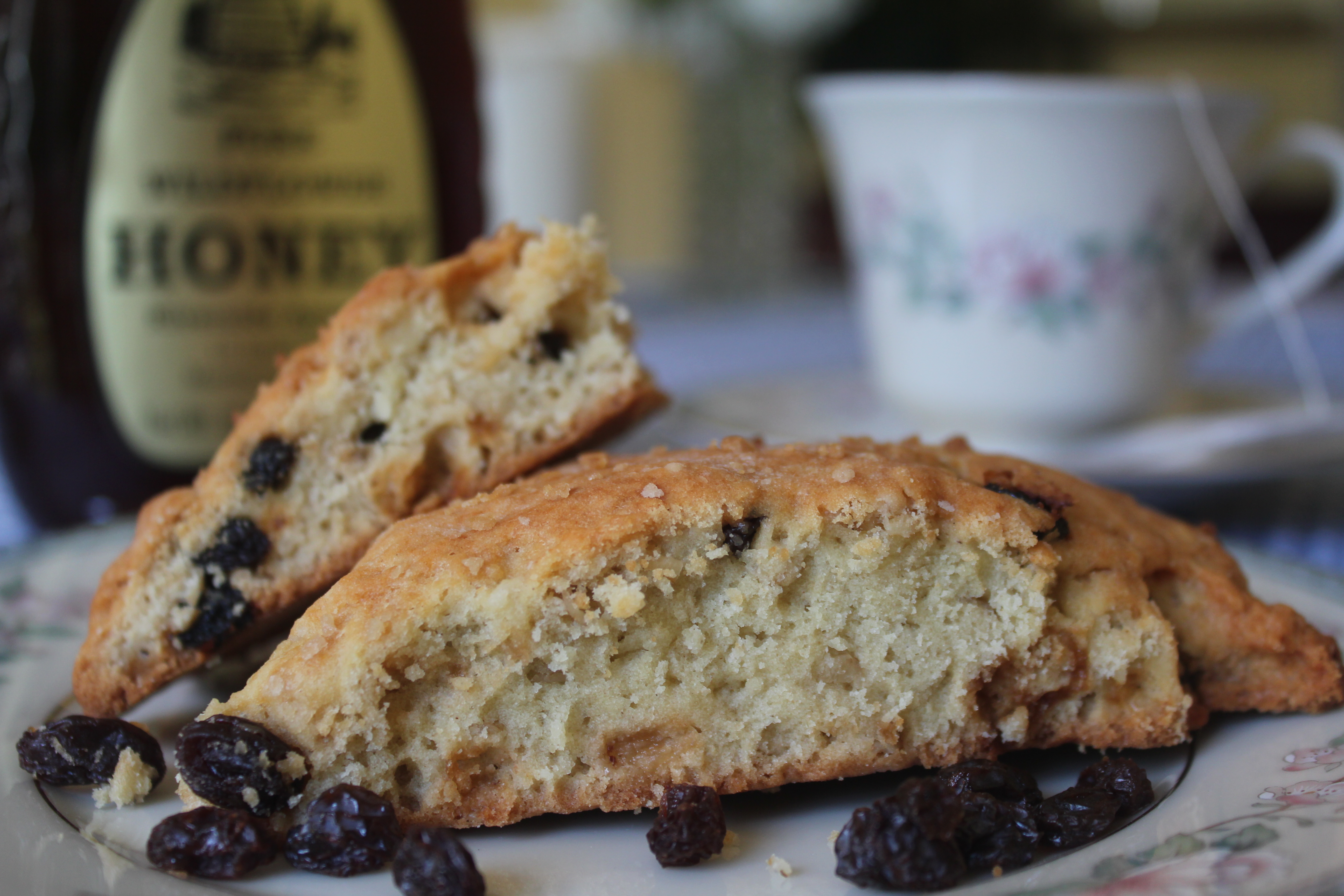
It was now time to bake…the recipe on the Bob’s Red Mill Millet Flour package was my starting point. However, I substituted the sugar with maple syrup. I also added some oats for a little crunch and sprinkled some maple sugar on top for extra sweetness. My whole milk yogurt also worked just fine even though the recipe called for nonfat. These scones were delicious! I liked the taste of the millet flour…it has a nutty flavor. I hope you enjoy this very lovely treat.

Millet Raisin Maple Scones
1 1/4 cup all purpose flour
1 cup millet flour
4 Tbsp oats
2 tsp baking powder
1/2 tsp kosher (or sea) salt
1/2 tsp baking soda
3 Tbsp maple syrup
1/2 cup canola oil
4 egg whites
1/4 cup plain yogurt
3/4 cup raisins
maple sugar

Preheat oven to 400 degrees F. Lightly grease a baking sheet and set aside. In a large bowl stir together the flours, oats, baking powder, salt and baking soda. In another bowl mix together the maple syrup, canola oil, egg whites and yogurt. Pour oil mixture into flour mixture, and stir until well blended. Next mix in the raisins. With your hands form the dough into a ball and place on a floured surface. Knead dough lightly 3 or 4 times, then place onto baking sheet. Pat into a smooth 8-inch circle. Using a sharp knife, cut into 8 wedges; leave in place. Sprinkle with maple sugar. Bake for 30 minutes, and let cool for 5 minutes before serving. Yields 8 tasty servings.

I am also sharing this recipe with Simply Sugar and Gluten Free, Joy of Desserts</a, Beauty and Bedlam, The Lady Behind the Curtain, Miz Helen’s Country Cottage, Something Swanky, Food Trip Friday, This Chick Cooks, Sweet as Sugar Cookies, Everyday Sisters and Cybele Pascal Allergen-Free Cuisine.

Steak and Statistics

Did you know that the first observance of Labor Day is believed to have been a parade of 10,000 workers on September 5, 1882, in New York City, organized by Peter J. McGuire, a Carpenters and Joiners Union secretary? By 1893, more than half the states were observing “Labor Day,” and Congress passed a bill to establish a federal holiday in 1894. President Grover Cleveland signed the bill soon afterward, designating the first Monday in September as Labor Day. Thanks to the U.S. Census for this information and the statistics that follow.

How are you celebrating this holiday? I have had the opportunity to go shopping to take advantage of some fabulous sales, along with visiting family and friends I haven’t seen in awhile. I had a “Wicked” good time seeing that musical too! And what’s on the menu for dinner tonight? Grilled steak! It is such an appropriate Labor Day entree, don’t you think? Enjoy the following statistics and your Labor Day.

153.2 million
Number of people 16 and older in the nation’s labor force in July 2011.

84.7%
Percentage of full-time workers 18 to 64 covered by health insurance during all or part of 2009.

Americans work in various occupations. Below is a sample:
Teachers (preschool – grade 12): 3,039,523
Computer Operators: 101,889
Actors: 10,980
Telephone Operators: 32,394
Bus Drivers: 265,429
Bakers: 117,405
Telemarketers: 55,733
Hairdressers, hairstylists and cosmetologists: 395,503
Janitors and building cleaners: 1,478,204

26.2 million
Number of female workers 16 and older in management, professional and related occupations. Among male workers, 16 and older, 24.0 million were employed in management, professional and related occupations.

53%
Projected percentage growth from 2008 to 2018 in the number of network systems and data communication analysts. Forecasters expect this occupation to grow at a faster rate than any other. Meanwhile, the occupation expected to add more positions over this period than any other is registered nurses (581,500).

76.1%
Percentage of workers who drive alone to work. Another 10.0 percent carpool and 5.0 percent take public transportation (excluding taxicabs).

25.1 minutes
The average time it takes people in the nation to commute to work. New York and Maryland had the most time-consuming commutes, averaging 31.4 and 31.3 minutes.

3.2 million
Number of workers who face extreme commutes to work of 90 or more minutes each day.

Sweeten Your Water Naturally with Fruit

Today is spectacular with blue skies, low humidity and a light breeze. Summertime is still here! It is such a welcome from the past weekend’s weather. Much of the East Coast was affected by Hurricane Irene, and hundreds of thousands of households are still without power. SensitiveHusband and I are thankful to be just fine along with our family, friends and neighbors.

Since I have been making bags of ice for my family who are without power, I am less focused on cooking today and more on just how refreshing water really is. Most of us are fortunate to be able to turn on a tap for flowing water. However there are many people in the U.S. who cannot do that today after the hurricane. And there are also people in the world who don’t ever have access to clean water. A hurricane sure does put needs and wants into perspective.

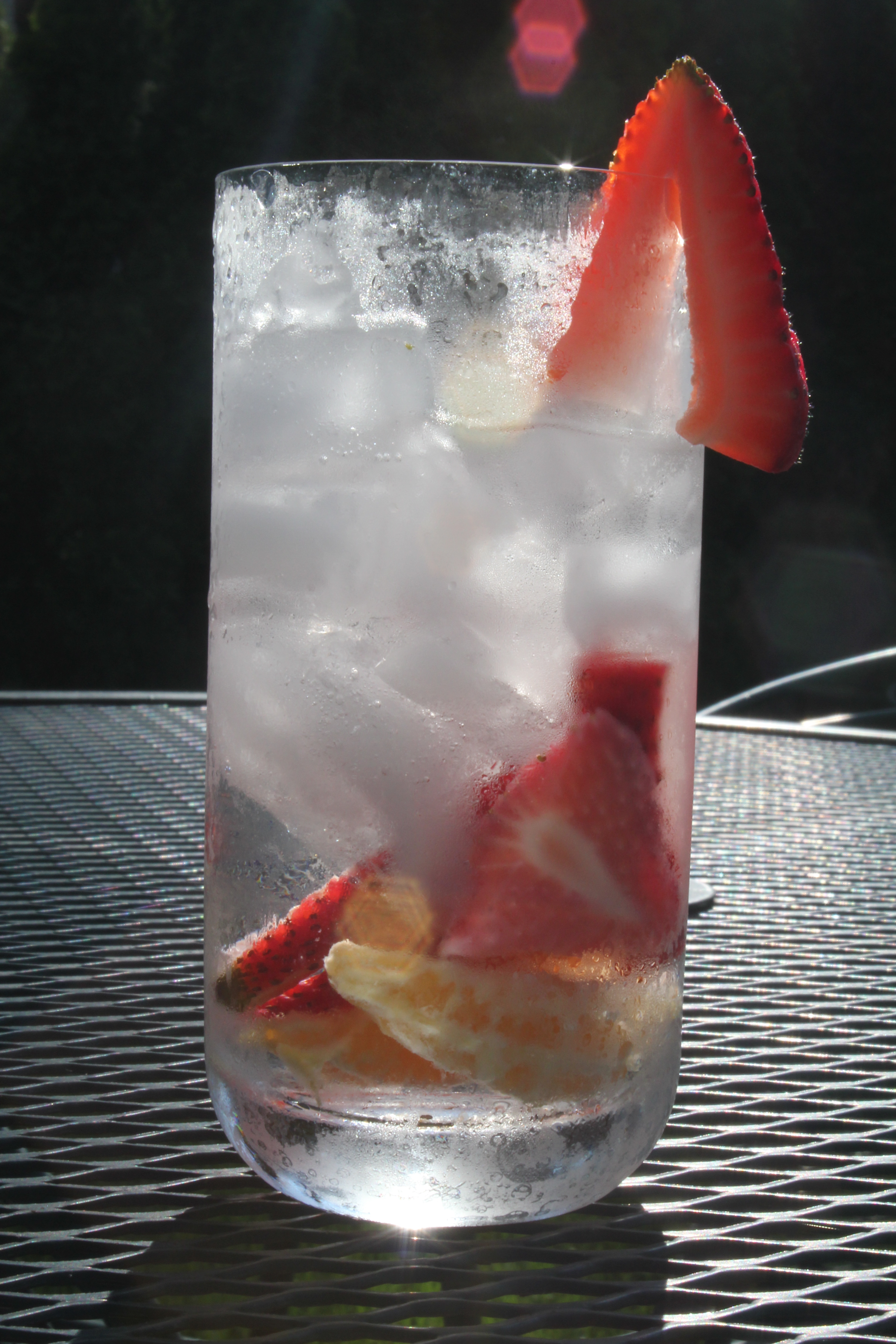
Speaking of water…some people are inclined to buy soda and fruity waters to quench their thirst, but it is even fresher to sweeten water naturally. The photo above is simply of a glass of water with sliced strawberries and orange slices. The result was quite delightful! I also enjoy a cold glass of water filled with sliced cucumbers. There are many fruit or vegetable combinations from which to choose…instead of reaching for a can of soda, why not slip a sliced peach or frozen blueberries into your water? Let me know what other options you have used. Have a great day.

The Blueberry Industry and Crumb Bars

Did you know that the U.S. leads the world in blueberry production, at almost 200,000 metric tons in 2008? North America certainly dominates this market since the next largest producer is Canada with almost 95,000 metric tons. Poland is distantly in third place with almost 8,000 metric tons.

The states that cultivate the most blueberries are Maine and Michigan with the Great Lakes State slightly edging out the Pine Tree State. Maine’s lead is in the wild blueberry market; virtually all of Maine’s cultivated blueberries are processed while about half of Michigan’s are used fresh and the other half processed.

The acres of land harvested for blueberries has about tripled between 1980 and 2009. The grower price for fresh blueberries has doubled during the last fifteen years while the price for processed has plummeted. Perhaps this is evidence of the increased demand for these sweet and healthy little fresh gems of goodness?

For those of you who would like to learn more about the blueberry industry, the USDA has a great web site with lots of interesting data like the facts above. If however, all of this talk about blueberries has you ready to eat some, below is a fabulous recipe for crumb bars that I adapted to make refined-sugar free. It’s a great time of year to use blueberries! And if you still have a few fruits left over, might I suggest making some blueberry oat bran muffins as well. Happy native blueberry season!

Blueberry Crumb Bars

2/3 cup agave nectar
1 teaspoon baking powder
2 cups all-purpose flour
1 cup whole wheat flour
3/4 cup canola oil
1 egg
1/4 teaspoon salt (optional)
1 pinch ground cinnamon (optional)
4 cups fresh blueberries
1/3 cup agave nectar
3 teaspoons cornstarch
1 teaspoon maple sugar (optional)

Preheat the oven to 375 degrees F. Grease a 9×13 inch pan.

In a medium bowl, stir together 2/3 cup agave nectar, both flours, and baking powder. Mix in salt and cinnamon, if desired. Mix in the oil and egg. Dough will be slightly crumbly. Pat half of dough into the prepared pan.

In another bowl, stir together the agave nectar and cornstarch. Gently mix in the blueberries. Sprinkle the blueberry mixture evenly over the crust. Crumble remaining dough over the berry layer. Sprinkle with maple sugar, if desired.

Bake for 40 minutes or until top is slightly brown. Cool completely before cutting into squares (about 16).

Adapted from Jam Hands and AllRecipes.

I am also sharing this recipe with Joy of Desserts, Simply Sugar and Gluten Free, Beauty and Bedlam, Tempt my Tummy Tuesdays, Lady Behind the Curtain, Miz Helen’s Country Cottage, Something Swanky, Food Trip Friday and Sweet as Sugar Cookies.

Creating a Yeast-Free, Sugar-Free Hamburger – Part 2: The Ketchup

In Part 1 of my hamburger saga, I had successfully created a yeast-free, sugar-free bun. Now I just needed some ketchup without vinegar (being yeast-free includes avoiding vinegar), onion or cane sugar in it because a burger just isn’t a burger without that condiment. First I started by checking out supermarkets and health foods stores…although I struck out with finding a brand that met my criteria. So back into the kitchen I went. I started with a recipe without vinegar and gave it a try although the consistency did not turn out the way I wanted. So I tried again, changing the amounts of liquids yet keeping all of the flavors. My second attempt was successful!
That night SensitiveHusband grilled us each a hamburger. I loaded mine with lettuce, tomato and ketchup, all sandwiched between a fresh, homemade bun. My meal tasted so good, and I was proud of myself for not letting these food sensitivities get in the way of my summery treat.

Yeast-free, Sugar-free Ketchup
1/4 cup water
1/3 cup tomato paste
2 tablespoons fresh lemon juice
2 tablespoons honey
1 teaspoon soy sauce (or tamari sauce)

Mix all the ingredients in a bowl and serve.

I am also sharing this recipe with Simply Sugar and Gluten Free, Balancing Beauty and Bedlam, Everyday Sisters, This Chick Cooks, Lady Behind the Curtain, Miz Helen’s Country Cottage and Food Trip Friday.