Tag Archives: Onion free

Surf and Turf Salad

Last week sensitivehusband and I went out to dinner with some good friends. There was a filet mignon special on the menu and I just had to indulge. The steak was served with asparagus and lobster mashed potatoes. That’s right – there were actual pieces of lobster in my potatoes! As I enjoyed my meal, I thought about some words of wisdom that my mom used to say – when at a restaurant and you start to get full, focus on eating the most expensive thing on your plate so you get your money’s worth. What a great dilemma to have – should I finish the steak or lobster? Well, I decided to keep eating both and ended up taking home some of my meal.

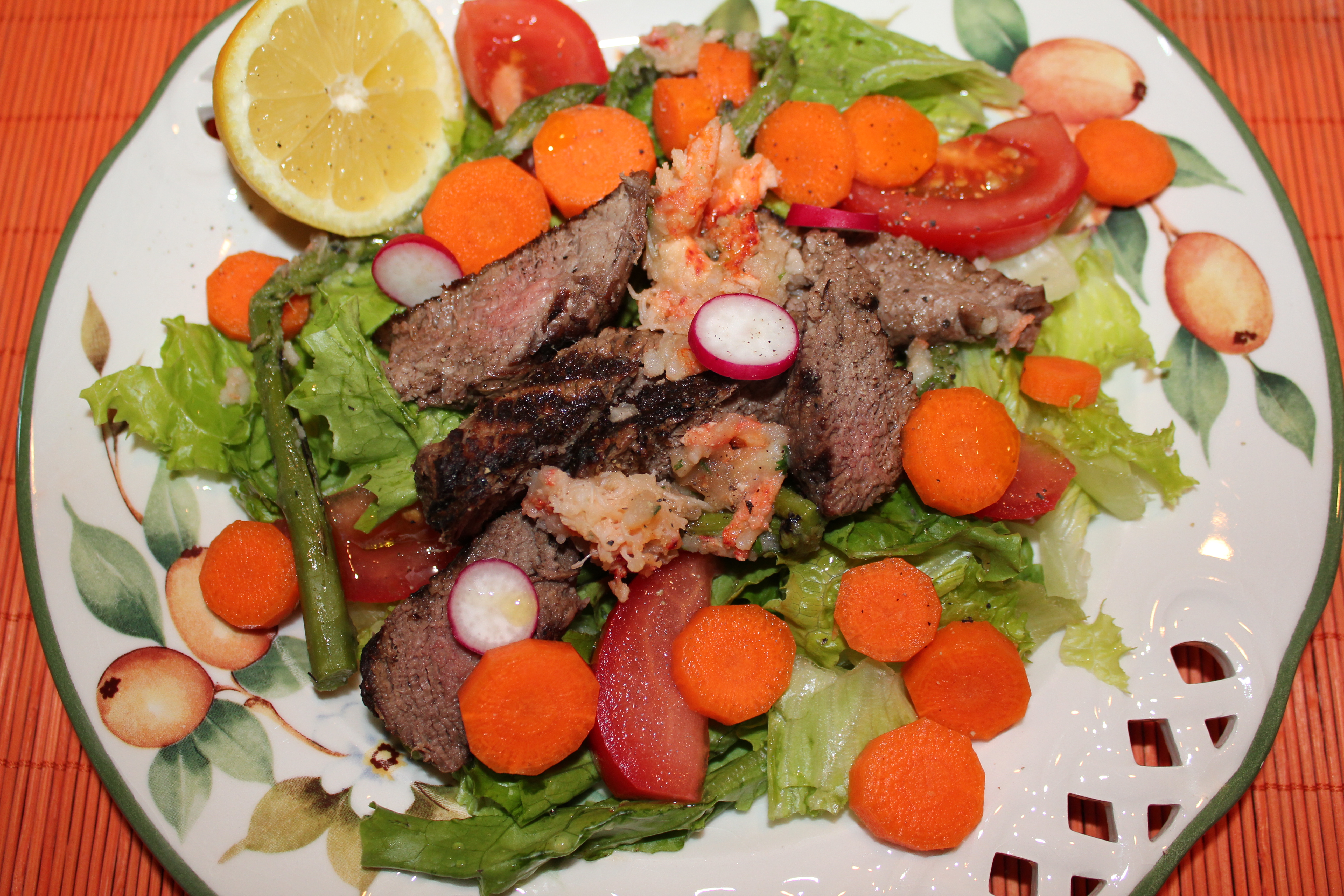
The next day a great idea struck me – why not transform my leftovers into an enjoyable lunch? I started by making a big salad with green leaf lettuce, radishes, carrots, tomatoes, cucumbers and the leftover asparagus. I then sliced the filet mignon into strips and separated the lobster from the mashed potatoes. I heated the filet and lobster on low heat in the microwave for one minute and placed them on top of the salad. For the dressing, I drizzled olive oil, spritzed on the juice from half a lemon, and added freshly ground pepper. Voila! I had a great lunch, finished every last bite, and didn’t let the expensive part of my meal go to waste.

I am also sharing my recipe with Simply Sugar and Gluten Free, This Chick Cooks and Food Trip Friday.

Fresh Ideas for Dressing Your Salads

Below are three salad dressings to try whether at home, at a restaurant, or on the go.

The first idea, shown in the picture, comes from a supportive reader of this blog who regularly makes her own salad dressings to use throughout the workweek. She got creative and made one without balsamic vinegar (so it is free of brewer’s yeast) and cane sugar. Here is the recipe:

Natalie’s Lemon Honey Dressing: Mix 1/4 cup water, 1/2 cup lemon juice, 3/4 cup canola oil, and 2tbs honey together. Add seasonings such as garlic, garlic powder, salt, pepper, or fresh herbs. Keep in a sealed container and refrigerate until it is time for a salad course.

The second idea came to me when sensitivehusband and I were out to dinner last week. I wanted to order a salad before my meal but could not select a dressing because each either had balsamic vinegar, cane sugar or both. I am not sure whether it was a moment of clarity or just a strong desire to not eat dry lettuce, but I came up with an idea. I asked our server to bring me some olive oil and a wedge of lemon with my salad. Add a little pepper to that combination and you have a tasty and refreshing accompaniment to your greens.

And last, but certainly not least, is a delicious store-bought salad dressing. Annie’s Organic Green Garlic Salad Dressing can be found at health foods stores, major grocery stores in the organic section, and online. It is a wonderful mixture of vegetable oil, spinach, garlic, parsley, lemon and other seasonings, along with being a vinegar and cane sugar free option.

I hope you find these ideas to be useful. If you have other tips for salad dressings, please share them!

Roasted Asparagus with Browned Butter

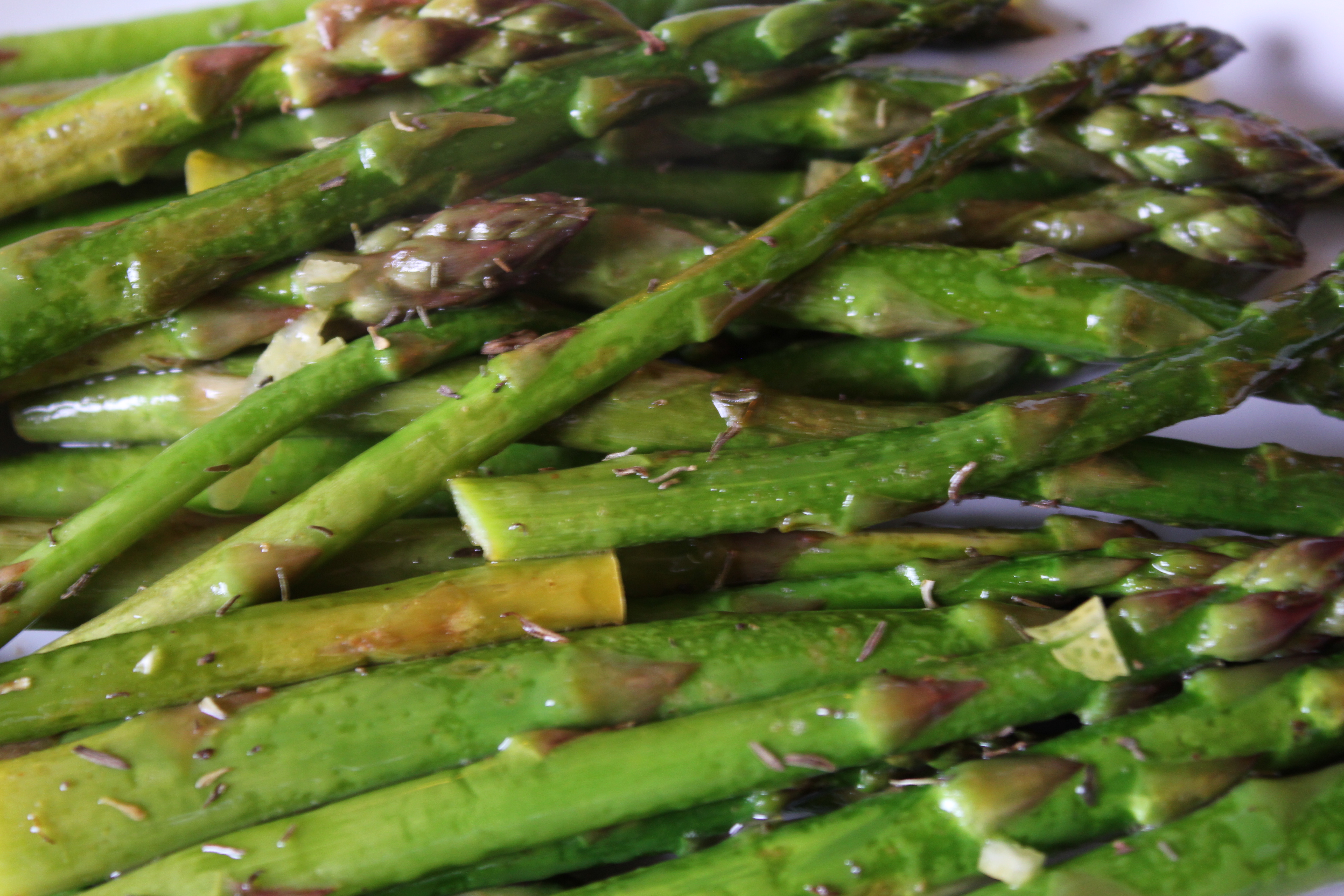
I did not realize that there was a difference between browned and burned butter before attempting this recipe. However, browned butter without burning can be achieved! Just follow the instructions in this Cooking Light March 2011 recipe. There are only a handful of ingredients and very few steps. The only change I made was to use regular lemons rather than Meyer lemons because I could not find them at the store.

Neither sensitivehusband nor I was sure whether we would like the result because we have always felt a bit ambivalent toward this green stalk-like vegetable. We both agreed to broaden our horizons and accept the vegetable challenge since asparagus is in season this time of year. When we tasted the result, we both raved about it and made it a second time in the same week! If you liked my Brussels sprouts recipe from awhile back, you will really enjoy this asparagus. The recipe would also work well using oranges instead of lemons, and using other herbs to replace the thyme.

Speaking of liking things, please consider “liking” sensitiveeconomist on Facebook. As always, thanks for reading this blog and sharing your ideas. Have a nice day!

What’s the Beef About Grass-Fed Beef?

I have wonderful memories as a child and young adult where my dad would fire up the grill for the steaks and my mom would make baked potatoes and vegetables. If it was a warm day, we would eat our delicious dinners on the deck. Oh yum…I can almost smell the steaks right now!

My love affair with a tasty steak continues. I do not eat them nearly as often as I used to although they are still seen at happy events and occasions. I just like to celebrate with a filet, tenderloin or strip steak on my plate!

A few weeks ago, while perusing the meat counter at the natural foods store, I made a decision – to purchase some grass-fed beef.

What is grass-fed beef? According to the USDA, the cows only eat what is in the pasture. This contrasts with typical grain-fed beef, which starts at pasture for the first year and then moves to a feedlot for a diet of corn, soy, grains, supplements, hormones and antibiotics. Research from Cooking Light notes that grain-fed beef can get up to weight for slaughter up to one year faster then their grass-fed counterparts, which is a financial incentive for the farmers.

Is there a nutritional benefit to grass-fed beef? Sure. According to this Time article, 100% grass-fed meat is lower in saturated fats, slightly higher in omega-3 fatty acids and higher in vitamins A and E.

So how does the grass-fed beef taste? When I made that first purchase, I got one package to eat fresh and one package to freeze for later. The fresh beef, which is shown in the picture above, was absolutely delicious. My husband seasoned the steaks with kosher salt and fresh ground pepper, and grilled them for a slightly shorter time than our usual grain-fed meat (because they were so lean). We both agreed that these steaks were much better than the usual ones. A couple of weeks later, we defrosted the frozen steaks and grilled them the same way. However, they were not quite fully defrosted, and in compensating we ended up overcooking them. Grass-fed beef is less forgiving to overcooking, so keep that in mind.

The cost is relatively high; I spent almost 50% more on the grass-fed meat. However, buying grass-fed is not just an economic decision – it can be an environmental or health decision too. Growing grass is easier on the environment than growing corn, and the decreased use of antibiotics and hormones are other reasons that people hand over more “green” for the grass-fed varieties. A less expensive per-pound alternative is to buy directly from a farm. Check out a listing of farms in you area at the website for the American Grassfed Association.

Will I buy more grass-fed beef? You bet! It is a wonderful treat.

Reprise of Garlic and Shrimp Pasta and Brussels Sprouts in a Chicken Dinner

It is amazing how last night’s dinner can become tonight’s side dish, isn’t it? My husband and I like to put a little bit of time into planning what we will eat for dinner during the week so that we can enjoy delicious meals without too much hassle. Take for example, sauteed chicken – we like cooking these chicken tenderloins during the week because they are simple and quick. We cook them in a sauté pan over medium heat with extra virgin olive oil, kosher salt, pepper, parsley and Italian seasonings. In about 15 minutes they are ready to serve. The leftover Garlic and Shrimp Pasta and Brussels Sprouts make terrific accompaniments. For the next night’s dinner, pair the leftover chicken with a new side dish – perhaps the Couscous with Cherries and Almonds! The rotating dinner plan is one that works for us and hopefully for you too!

Vegetable Challenge: Brussels Sprouts

When I found out about my food sensitivities a few months ago, my universe of food possibilities shrank substantially. At least I thought that was the case until I decided to host my own vegetable challenge. The premise? Buy one vegetable each week that either I have never tried or did not think I liked, and prepare it as a side dish with dinner. So the first vegetable challenge for our household was Brussels sprouts. My husband and I both thought the veggie was ok, but hadn’t actually sampled them since we were kids. Could we prepare them so that we liked them?

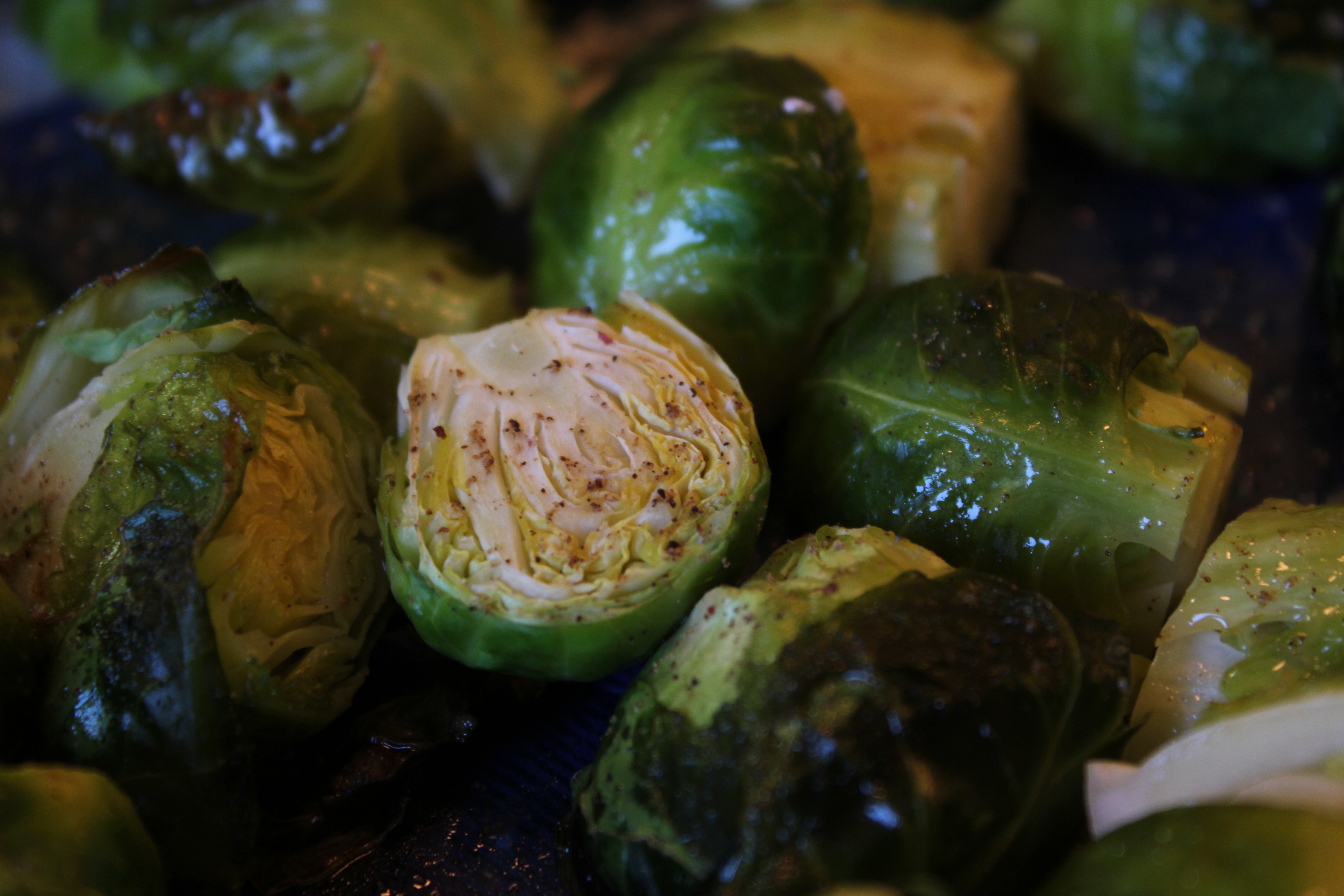
We prepared the Brussels sprouts very simply: we washed the veggies and then cut each one in half. We poured them into a glass baking dish that had a small coating of extra virgin olive oil. Then we tossed them with a bit of kosher salt, ground pepper, parsley and extra virgin olive oil. We roasted them at 400 degrees for 20-25 minutes.

The verdict? The first vegetable challenge was a success! So the next week we prepared them again, this time adding some chopped garlic. That was also a delicious dish! So it goes to show that Brussels sprouts really can be tasty. They are now regularly seen in our household!

MIL and FIL’s Garlic and Shrimp Pasta

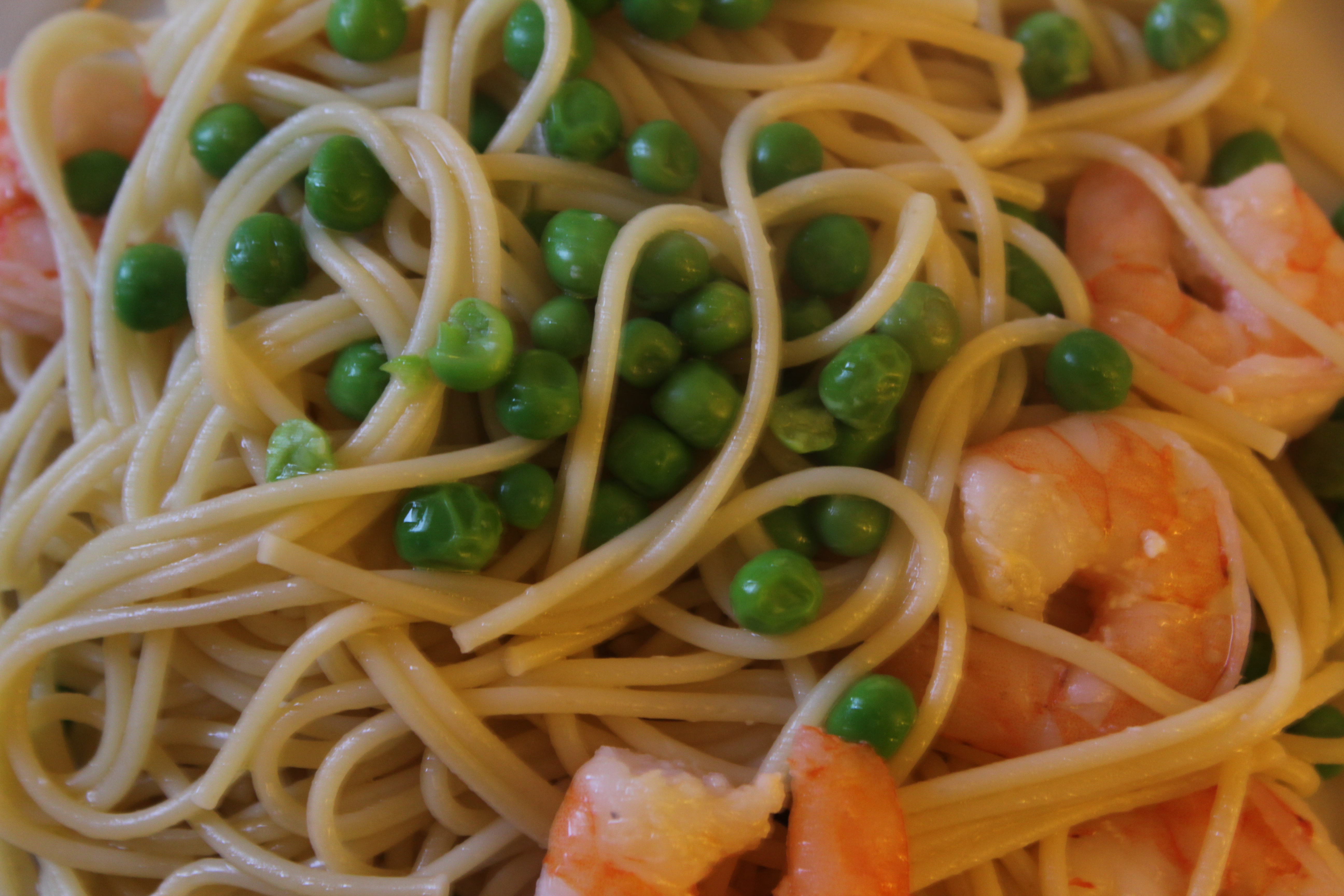
Last night, my husband and I whipped up this delicious dish. What a great way to start the weekend! It’s a version of the classic agilo e olio, or garlic and oil, pasta dish. I first had this dinner at my MIL and FIL’s house around the holidays and liked it so much I asked them how to make it. It is quickly becoming a classic in our household! This is a great way to enjoy pasta if you are sensitive to tomato sauce. Instead of the shrimp and peas, you could add chicken and broccoli – or something else! If you have other variation ideas, please share them by commenting below. (And five points goes to whomever can correctly identify what MIL and FIL stands for!)

Ingredients (for two-person meal): 2/3 lb spaghetti; 4 garlic cloves, chopped; 1/4 cup extra virgin olive oil; 14 large and frozen shrimp, deveined, peeled and raw; 1 cup organic peas, frozen

Fill the pasta pot with water. As the water reaches a boiling temperature, chop the garlic cloves and mix most of them into the 1/4 cup of oil. Cook the spaghetti according to the instructions on the package. As the spaghetti cooks, heat a small frying pan with a bit of extra virgin olive oil. Sauté the remaining garlic in the pan, then add the shrimp and heat until cooked (shrimp will turn pink). When there are two minutes left for the pasta to cook, add the peas to the water. Once the pasta is cooked, reserve about 1/2 cup of the pasta water. Drain the pasta and peas, then add back into the empty pasta pot. Stir in the garlic and oil mixture, then add the garlic and shrimp sauté. Add in the reserved pasta water until it reaches your desired liquid amount. Have a wonderful dinner!

I am also sharing this recipe with Everyday Sisters and Miz Helen’s Country Cottage.